
Repair or Replace? A Rockford Homeowner's Guide to Concrete Driveways
How to tell whether a cracked, sunken or flaking Rockford driveway can be repaired or should be replaced, with 2026 cost ranges and the city permit rules.
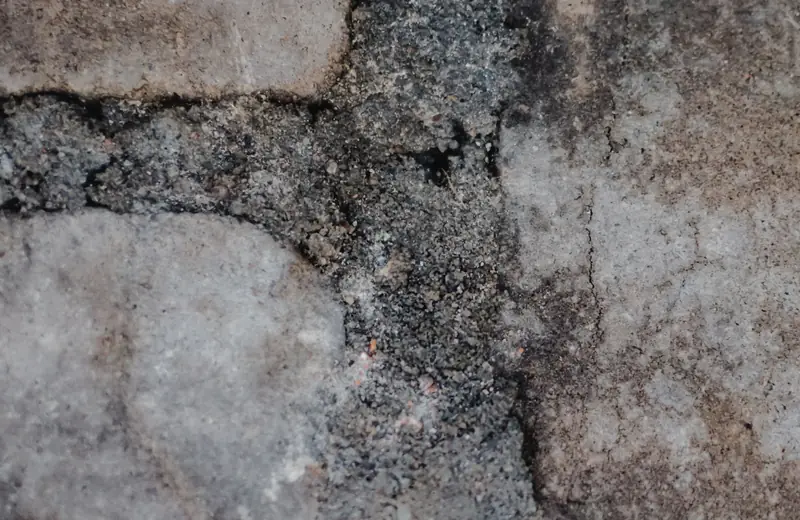
Rockford driveways have a hard life. Every winter brings freeze-thaw cycles, road salt tracked in on tires, and the occasional snowplow scrape. By spring a lot of homeowners are staring at new cracks, a sunken slab by the garage, or a surface that's started to flake, and wondering whether to patch it or tear it out.
This guide explains what each kind of damage usually means, what repair and replacement cost in 2026, and what the City of Rockford requires before you rebuild. Cost figures are national numbers from Angi's 2026 data. Where something is our rule of thumb rather than a published figure, we say so.
The cost gap: repair vs. replacement
According to Angi, the national average for concrete driveway repair in 2026 is $1,872, and most homeowners pay $829 to $2,925. A full new concrete driveway averages about $6,400, usually $8 to $20 per square foot. A typical 20-by-20 driveway runs about $3,200 to $6,000 to replace.
| Work (national, 2026) | Typical cost |
|---|---|
| Filling minor cracks | $0.50 to $3 per linear foot |
| Resealing | $0.10 to $0.16 per sq. ft. |
| Resurfacing (overlay) | $3 to $5 per sq. ft. |
| Raising or leveling sunken slabs | $3 to $25 per sq. ft. |
| Replacing individual damaged slabs | $6 to $14 per sq. ft. |
| Full new driveway | $8 to $20 per sq. ft. (average about $6,400) |
Source: Angi 2026 cost guides for concrete driveway repair and concrete driveway installation.
Repair is cheaper up front almost every time. The real question is whether the repair will last long enough to be worth it.
Read the damage
Hairline and shrinkage cracks
Thin, web-like cracks or narrow cracks under about 1/4 inch wide are normal in concrete. They're mostly cosmetic. Clean them out and fill them with a concrete crack filler to keep water from getting in, because water that freezes inside a crack is what makes it grow. This is the cheapest fix there is.
Verdict: repair.
Sunken or tilted slabs
A slab that has dropped at the garage, at the apron, or next to the house usually means the soil or base underneath settled or washed out. If the slab itself is still in one piece, it can often be lifted back into place by mudjacking or polyurethane foam leveling. Angi puts raising or leveling at $3 to $25 per square foot, depending on the method and how much has to be lifted.
Verdict: usually repair, as long as the slab isn't broken into pieces.
Flaking, pitting and scaling
Scaling is when the top layer of the surface peels or flakes off, often after a few winters. The National Ready Mixed Concrete Association (NRMCA) explains that concrete saturated with water and exposed to freeze-thaw cycles is prone to scaling, and that deicing chemicals make it worse. Concrete without enough entrained air, weak surface finishing and poor curing are common causes.
If the scaling is shallow, resurfacing with a bonded overlay ($3 to $5 per square foot, per Angi) can restore the look. Angi notes that resurfacing generally lasts about half as long as new concrete or less, so it buys time rather than resetting the clock.
Verdict: repair if shallow and limited. If most of the surface is scaling, ask about replacement with air-entrained concrete.
Wide cracks, heaving and broken pieces
Cracks you can fit a coin into, edges at different heights, slabs broken into several pieces, or a surface that rocks when you drive on it usually point to a failed base or serious frost heave. Patching tends to fail again within a season or two because the problem is underneath.
Verdict: replace the affected slabs or the whole driveway. If your driveway is poured in separate sections, replacing just the bad sections ($6 to $14 per square foot, per Angi) can be a good middle ground.
A simple rule of thumb
Here's the way we'd think about it. This is our rule of thumb, not an industry standard:
- Age. Angi says a well-maintained concrete driveway lasts about 30 years. If yours is past 25 and has problems in several places, replacement is often the better value.
- How much is damaged. If the damaged area is a small fraction of the driveway, repair it. If damage is spread across a third or more of the surface, get a replacement quote as well.
- Is the base still good? Repairs only last if the ground underneath is stable. Repeated sinking, heaving or pieces that rock suggest the base has failed, and only replacement fixes that.
- Your plans. Selling in the next year or two? A clean repair and fresh sealing may be all you need. Staying for the long haul? A properly built new driveway can pay off.
Rockford permits
In the City of Rockford, a permit is required to build or rebuild a driveway on a 1- or 2-family property, and curb cuts and sidewalks need permits too. Normal maintenance doesn't need one. Fees are based on the cost of construction. Loves Park, Machesney Park, Roscoe, Belvidere and other nearby towns have their own rules, so ask your contractor to confirm and to pull the permit as part of the job.
If you replace, build it for Rockford winters
A new driveway is a chance to fix whatever made the old one fail. Ask each contractor about:
- Air-entrained concrete. NRMCA recommends good-quality air-entrained concrete, with a strength of 4,000 psi, for slabs exposed to severe freezing and thawing. The tiny air bubbles give freezing water room to expand.
- Base and thickness. A compacted gravel base, and usually 4 inches of concrete for cars or 5 to 6 inches for heavier vehicles.
- Joints and drainage. Control joints spaced to manage cracking, and a slope that sends water away from the garage and house.
- Curing and sealing. Proper curing, then a breathable penetrating sealer. Angi suggests resealing every two to three years.
- No deicers the first winter. NRMCA and other concrete industry groups advise against deicing chemicals during a new slab's first winter. Use sand for traction instead, and use salt sparingly after that.
Most concrete work around Rockford happens from spring through fall. Cold-weather pours are possible with blankets and other precautions, but they cost more and need careful curing.
Getting quotes
Get two or three written estimates and make sure each one covers tear-out and haul-away, base depth, thickness, reinforcement, joint spacing, the concrete mix, the finish, permits and the warranty. Ask for proof of insurance, especially for work on the apron or public sidewalk.
Get a free estimate
Not sure whether yours is a repair or a replacement? We're a free referral service. Call or send a quick request and we'll connect you with an independent local concrete contractor who serves Rockford and nearby towns. It costs you nothing and there's no obligation.
Sources
- Angi: Concrete driveway repair cost (2026 data)
- Angi: Concrete driveway cost (2026 data)
- NRMCA: CIP 2, Scaling Concrete Surfaces
- Ohio Concrete: Use of deicing agents on your concrete surface
- City of Rockford: Driveway and parking lot permits
Cost figures are national averages from the sources above or are labeled as our estimates. They are not quotes. Your price depends on your property.
Rockford Concrete Contractors is a free referral service, not a contractor. We connect you with independent local pros. Participating contractors may pay us a fee. Learn more.
Get a free concrete estimate
Call or send a quick request. We'll connect you with a local pro who serves your area. No cost, no obligation.